

April 16, 2026 | FDA Adverse Event Reporting Services: A Step-by-Step Process Guide
When a reportable adverse event reaches your organization, the first question is: how much time do you have? Timelines vary by product category and event type, and the clock starts when you receive information — not when the event occurred. This article walks through the five-step reporting process, from case intake through post-submission follow-up, including the forms, timelines, and actions required at each stage.
For background on what constitutes a reportable adverse event, how serious and non-serious events are defined, and the broader strategic context for adverse event management, see our complete guide to adverse event management services.
Regulatory Requirements for Adverse Event Reporting
Reporting timelines and submission requirements may vary by product category. The table below summarizes the primary FDA frameworks. Companies with products spanning multiple categories need processes that accommodate different timelines, forms, and submission portals.
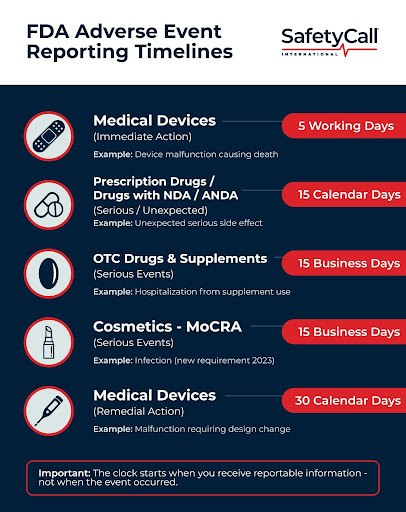
Prescription pharmaceuticals (21 CFR 314.80): Drug manufacturers submit 15-calendar day expedited reports for serious, unexpected adverse drug experiences, plus quarterly (first 3 years of a drug application’s lifecycle), and annual periodic reports (beginning after the first 3 years).
Medical Devices (21 CFR 803 – MDR): Device manufacturers submit 30-calendar day reports for events requiring remedial action, or 5-working day reports for events necessitating immediate action. Malfunction reporting applies even when no patient harm occurred.
Dietary Supplements and Nonprescription (OTC) Drugs (21 U.S.C. 379aa-1): Companies submit 15-business day reports for serious adverse events. Unlike pharmaceuticals, supplements and OTC drugs without an abbreviated- or new drug application (ANDA/NDA) have no periodic reporting requirement.
Cosmetics (21 U.S.C. § 364a): The Modernization of Cosmetics Regulation Act of 2022 created the first mandatory serious adverse event reporting requirements for cosmetics. Companies submit 15-business day reports.
The Adverse Event Reporting Process: Step by Step
Effective adverse event reporting follows a systematic process from initial intake through post-submission follow-up. Here is how it works in practice.
| Step | What Happens | Key Notes |
|---|---|---|
|
1
Case Intake
(0–24 hours)
|
Adverse events reach companies through multiple channels requiring coordinated monitoring:
Medical intake teams also conduct patient follow-up for additional details, confirm product information including lot numbers, and collect concomitant medication and health history. |
Immediate Actions:
The first 24 hours determine whether your organization will meet regulatory reporting deadlines. Delayed recognition of serious events creates unnecessary compliance risk. |
|
2
Medical Review
(1–5 days)
|
Licensed physicians, pharmacists, or nurses review clinical details to provide the medical assessment FDA expects. This includes:
|
Medical expertise is essential at multiple stages: During initial case review, trained medical professionals assess seriousness using regulatory criteria. During formal medical review, these professionals apply standardized coding, review for listedness and unexpectedness, and determine case reportability using reasonable medical judgment the FDA expects in submitted reports. Reports lacking proper medical review may face higher levels of FDA scrutiny and generate agency follow-up inquiries. |
|
3
Submission Prep
(5–10 days)
|
Report Compilation — prepare the applicable form:
Develop comprehensive narratives describing the event sequence, clinical course, and outcome in clear, chronological format. Quality Control includes:
|
Quality review before submission matters: Incomplete reports generate FDA rejections that require resubmission and explanation. Quality review before submission prevents these avoidable delays. |
|
4
Electronic Submission
(varies by timeline)
|
FDA provides multiple electronic submission channels:
The appropriate submission channel depends on your product category and reporting requirements. Post-submission activities include:
|
Electronic submission is FDA’s preferred method, but companies should maintain backup plans for system outages. |
|
5
Post-Submission
(ongoing)
|
Follow-up reporting obligations:
Ongoing signal detection:
|
Reporting doesn’t end with initial submission: Follow-up is an ongoing regulatory obligation that strengthens your overall safety program. Proactive signal detection and communication with regulatory authorities demonstrates your commitment to post-market safety. |
Building Your Reporting Program
Adverse event reporting requires medical expertise, regulatory knowledge, operational infrastructure, and ongoing vigilance. Federal regulations establish mandatory timelines that require prompt recognition, accurate assessment, and complete documentation, regardless of how your program is structured.
Some companies build complete internal capabilities with dedicated staff and validated technology. Others work with specialized partners who provide medical review, regulatory expertise, and submission support. Many use a combination of both. The right approach depends on your product portfolio, organizational resources, and risk tolerance.
Understanding the full scope of reporting requirements is the starting point for evaluating what makes sense for your business. Whether you manage this internally, work with partners, or use a hybrid model, the obligation is the same: protect public health through timely reporting, maintain accurate documentation, and demonstrate your commitment to consumer safety.
How SafetyCall International Supports Adverse Event Reporting
SafetyCall International manages adverse event reporting for clients across multiple FDA-regulated industries. Our practice is triple-licensed in medicine, pharmacy, and veterinary medicine, which means our team of licensed healthcare professionals conducts medical reviews and correlation assessments in-house. We manage electronic submission to the FDA with 24/7 multilingual intake capabilities across dietary supplements, cosmetics navigating MoCRA compliance, medical devices, and prescription and OTC medications.
Whether you are building internal capabilities, looking to supplement your existing team, or exploring a full-service partnership, we can help you evaluate what approach makes sense for your specific product portfolio and regulatory requirements.
For guidance on how to structure your overall adverse event management program — including signal detection, complaint integration, and the build-vs.-partner decision — see our complete guide to adverse event management services.
Frequently Asked Questions
What is the difference between expedited and periodic reporting?
Expedited reports cover serious, unexpected adverse events that require rapid FDA notification (generally within 5 to 15 days depending on product type and event seriousness). Periodic reports aggregate non-serious or expected events and are submitted on a recurring schedule, such as quarterly and then annually, for drugs with an approved NDA or ANDA.
What minimum information is required in an adverse event report?
FDA requires four minimum elements for a valid report: identifiable patient, identifiable reporter, suspect product (name, manufacturer, lot number when available), and adverse event description. Submit reports even if information is incomplete.You can file follow-up reports when additional details become available.
What are the consequences of failing to report?
FDA enforces adverse event reporting requirements through a range of actions, including Form 483 observations, warning letters, consent decrees, mandatory recalls, civil penalties, and, in cases of deliberate violations, potential criminal prosecution. Most enforcement actions stem from systemic reporting failures rather than isolated missed reports. Documented processes that demonstrate good faith compliance efforts matter.
Written by

Senior Clinical Toxicologist and Pharmacovigilance Officer
Anna VerMeer specializes in pharmacovigilance, individual case safety report processing, signal detection and FDA adverse event reporting.